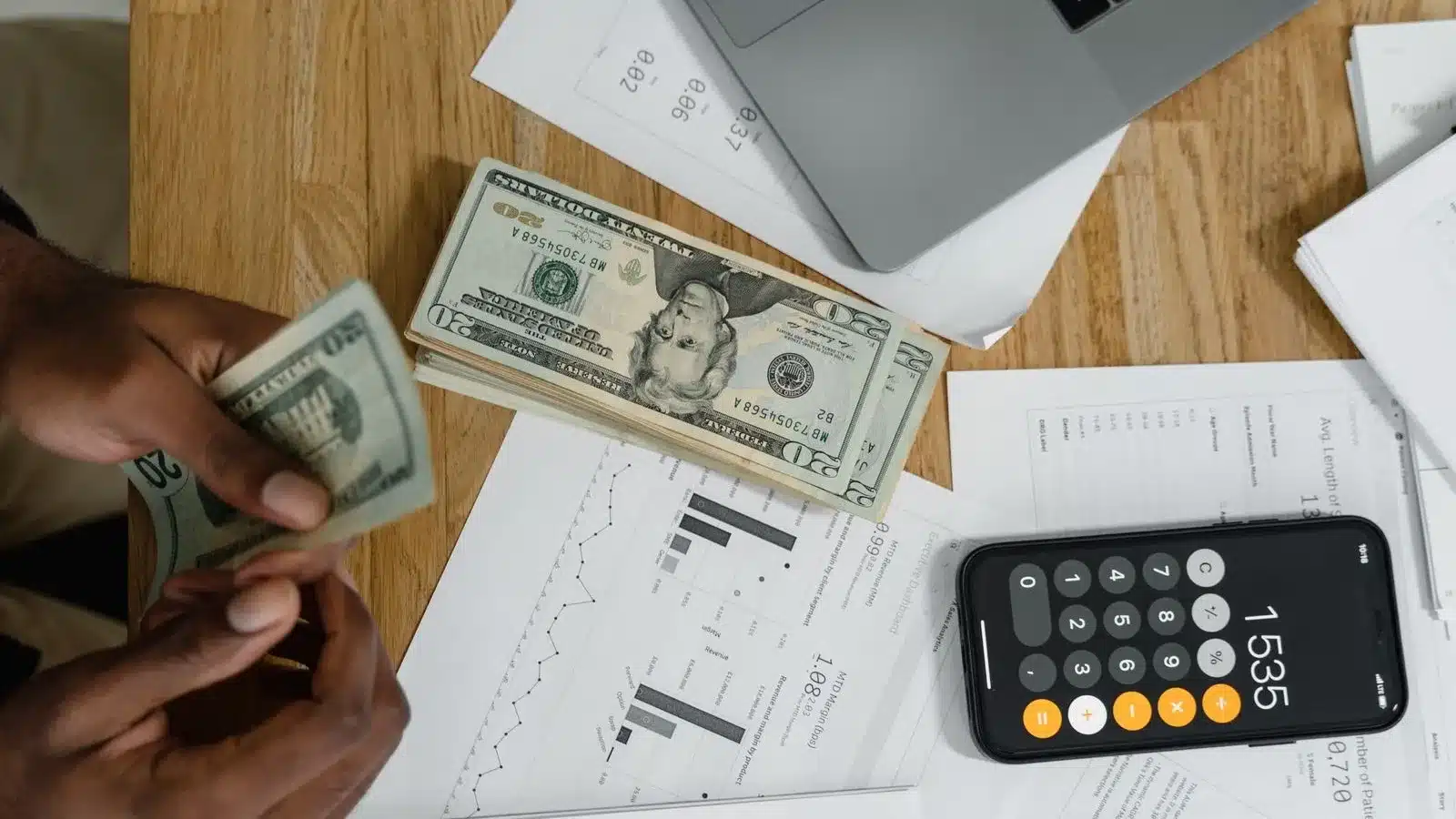
A sinking fund is money you save gradually for a specific future expense. You estimate the cost, choose a deadline, divide the amount by the number of pay periods or months remaining, and include that contribution in your budget. When the bill arrives, the money is already waiting.
Sinking funds work well for insurance premiums, vehicle maintenance, home repairs, gifts, school costs, travel, annual subscriptions, and planned replacements. They reduce the chance that a predictable expense will drain your emergency savings or become credit card debt.
Key takeaways
- Use sinking funds for costs you expect, even when the exact amount or date is uncertain.
- Calculate each contribution from the target amount, current balance, and time remaining.
- Keep the money accessible and separate enough that you can track it.
- Start with a few high-impact categories instead of creating dozens of tiny funds.
- An emergency fund protects against unexpected shocks. A sinking fund prepares for a known purpose.
What is a sinking fund?
In a personal budget, a sinking fund is a savings category for a planned expense that does not fit neatly into one month’s cash flow. The name comes from finance and accounting, but the household version is simple: save smaller amounts now so you do not need one large amount later.
Suppose your auto insurance costs $1,200 every six months. Paying the bill from the month it arrives can make that month’s budget look $1,200 more expensive. Saving $200 each month shows the true ongoing cost of the policy.
The fund does not have to be a separate bank account. It can be:
- A separate insured savings account
- A labeled subaccount or savings bucket
- One savings account with a spreadsheet that tracks categories
- Cash envelopes for small, near-term expenses, if physical cash is safe and practical for you
What matters is that you know how much belongs to each purpose and do not spend the same balance twice.
Sinking fund vs. emergency fund
Both are cash reserves, but they solve different problems.
| Feature | Sinking fund | Emergency fund |
|---|---|---|
| Purpose | One planned or reasonably expected cost | Unplanned necessary cost or sudden income loss |
| Target | Specific estimated amount | Starter cushion or months of essential expenses |
| Timeline | Usually tied to a date or replacement cycle | Ongoing protection without a fixed spending date |
| Typical use | Annual premium, tires, gifts, travel | Urgent repair, medical need, job loss |
| After use | Recalculate for the next cycle | Refill after a qualifying emergency |
A car illustrates the difference. Routine maintenance, registration, and eventual tire replacement belong in sinking funds because you can expect them. A sudden major repair that could not reasonably be anticipated may come from the emergency fund.
The line is not always perfect. Consistency matters more than the label. If a cost repeats, add it to planned savings before the next cycle.
Which sinking funds should you create?
Review the last 12 months of transactions, bills, and calendar events. Look for costs that were predictable but difficult to pay from one paycheck.
Common categories include:
Home
- Maintenance and repairs
- Appliance replacement
- Property taxes or insurance not handled through escrow
- HOA assessments you can reasonably anticipate
- Furniture and moving costs
Transportation
- Registration and inspection
- Insurance premiums
- Routine service
- Tires and repairs
- Future vehicle replacement or down payment
Health and family
- Insurance deductibles
- Dental and vision costs
- School supplies and activities
- Child care deposits or seasonal changes
- Pet care and veterinary costs
Lifestyle and events
- Gifts and holidays
- Weddings and celebrations
- Travel
- Clothing
- Memberships and annual subscriptions
Financial and professional costs
- Tax preparation or tax payments
- Professional licenses
- Equipment and continuing education
- Annual software or business costs, when kept in the appropriate business budget
Do not create every possible category on day one. Choose three to five costs that are likely, large enough to disrupt cash flow, and within your ability to fund.
Prioritize sinking funds when money is limited
You may identify more sinking funds than the budget can support. Rank them by consequence and timing instead of dividing a small amount equally. Start with expenses that are required, likely, expensive, and close to their due dates. Insurance premiums, essential vehicle work, professional renewals, and known medical costs usually deserve attention before optional travel or upgrades.
Compare the total monthly contribution with the available savings percentage. If the amount does not fit, extend a flexible deadline, reduce an optional goal, or fund only the highest priorities. Do not create a transfer schedule that repeatedly has to be reversed.
Keep a small starter contribution for a lower-priority category only when it will not weaken essential bills or the emergency reserve. Sinking funds should make the plan more stable, not create a new cash shortage.
Calculate the monthly contribution
Use this formula:
(Target amount − amount already saved) ÷ months remaining = monthly contribution
Example 1: fixed bill
An annual membership costs $360 in nine months, and nothing is saved.
($360 − $0) ÷ 9 = $40 per month
Example 2: goal already in progress
You expect a $1,500 trip in 10 months and already saved $300.
($1,500 − $300) ÷ 10 = $120 per month
Example 3: uncertain expense
You do not know the exact cost of future car repairs. Review recent maintenance, the vehicle’s age and condition, upcoming service recommendations, and a reasonable repair estimate. If you choose a $1,200 annual target:
$1,200 ÷ 12 = $100 per month
This is an estimate, not a guarantee that repairs will cost $1,200. Review it after actual expenses.
Calculate by paycheck instead
If you are paid every two weeks, annual target ÷ 26 gives a contribution per paycheck. For a $1,300 goal:
$1,300 ÷ 26 = $50 per paycheck
Be careful with “twice a month” and “every two weeks.” Twice-monthly pay usually produces 24 checks per year. Biweekly pay usually produces 26.
Fit sinking funds into the monthly budget
Treat contributions as current planned expenses. The money is not available for general spending just because the bill comes later.
Here is a hypothetical plan:
| Fund | Target or cycle | Current balance | Monthly contribution |
|---|---|---|---|
| Auto insurance | $900 in 6 months | $150 | $125 |
| Car maintenance | $1,200 per year | $200 | $100 |
| Gifts | $720 per year | $120 | $60 |
| School costs | $600 in 8 months | $200 | $50 |
| Travel | $1,500 in 10 months | $300 | $120 |
| Total | $455 |
The total matters. Five reasonable goals can create an unrealistic combined contribution. Compare $455 with the full monthly budget before automating transfers.
If the total does not fit:
- Protect required and high-risk expenses first.
- Reduce optional target amounts.
- Extend flexible deadlines.
- Pause lower-priority categories.
- Identify costs that require a larger decision, not a smaller monthly sacrifice.
Saving too aggressively for a vacation while missing an insurance premium defeats the purpose of planning.
Where should you keep sinking funds?
For near-term goals, prioritize safety, access, low fees, and clear tracking. A savings account or money market deposit account can work. Eligible deposits at an insured bank receive automatic coverage under FDIC deposit insurance, subject to ownership and institution limits. Credit unions may use federal share insurance through the NCUA.
Compare:
- Annual percentage yield
- Monthly fees and waiver requirements
- Minimum balances
- Transfer time to checking
- Limits on withdrawals or transfers
- Whether multiple labeled buckets are available
- Deposit insurance and the identity of the bank or credit union holding the funds
Do not place money needed within a year or two into a volatile investment merely to chase higher returns. A market decline near the spending date could leave the goal underfunded.
For longer goals, the choice may be less obvious. Time horizon, risk, taxes, and the flexibility of the purchase matter. A future vehicle fund needed in five years is different from an annual insurance bill.
One account or several?
One account with tracked categories
This keeps banking simple and can help you earn the same rate on the full balance. Use a spreadsheet or app to maintain a ledger:
| Date | Category | Deposit | Withdrawal | Category balance |
|---|---|---|---|---|
| July 15 | Car maintenance | $100 | $600 | |
| July 15 | Gifts | $60 | $240 | |
| July 22 | Car maintenance | $180 | $420 |
The bank balance should equal the total of all category balances. Reconcile it monthly.
Separate accounts or bank buckets
Separate labels make progress visible and reduce accidental spending. Too many accounts can create clutter, minimum-balance problems, or transfer delays. Confirm account fees before opening several.
Choose the simplest structure that prevents confusion.
Review sinking funds on a rolling calendar
Create a 12-month list showing each expected expense, due date, current balance, monthly contribution, and account location. Review the next 90 days every month. This catches a renewal or seasonal cost before the remaining contribution becomes unrealistic.
When one expense is paid, decide what happens to the old contribution. You can replenish that category for the next cycle, redirect it to the next deadline, or move it to a higher-priority goal. The decision should be visible in the monthly budget rather than disappearing into general spending.
Recalculate sinking funds after a price change, partial payment, refund, or new due date. The basic formula is remaining amount divided by remaining contribution periods. The CFPB savings plan tool uses the same goal-and-deadline logic.
A calendar also prevents duplicate saving. If an annual premium is already included in the monthly category total, do not create a second transfer for the same bill. Keep the goal name specific enough to show exactly what the balance covers.
Use the fund when the expense arrives
Pay from checking or a credit card only if you can transfer the matching amount from the sinking fund and follow your normal payment plan. If you use a rewards card, the fund should already contain the money. Rewards do not justify carrying interest-bearing debt.
After the purchase:
- Record the withdrawal against the correct category.
- Compare the actual cost with the estimate.
- Choose the next target date and amount.
- Update the contribution.
If tires cost $900 instead of the planned $700, do not simply empty another category without recording it. Adjust the transportation estimate for the next replacement cycle.
What if you need the money early?
Prioritize by urgency and consequence. A required insurance payment may deserve money currently labeled for optional travel. Make the transfer explicit, then recalculate both goals.
Avoid pretending that all categories remain fully funded after moving money. The account balance may be unchanged, but the plan has changed.
If a true emergency occurs, it may be reasonable to use available sinking funds before borrowing at a high cost. The tradeoff is that planned expenses are still coming. Update the budget immediately and decide which goals to delay.
Common mistakes
Creating too many funds
Twenty categories can spread limited savings so thin that none becomes useful. Start with the expenses most likely to disrupt your budget.
Ignoring the current balance
Use the formula with money already saved. Otherwise, you may contribute too much or lose track of progress.
Using one savings balance for several goals without a ledger
A $3,000 balance cannot simultaneously cover a $2,000 trip, $1,500 repair reserve, and $1,000 insurance premium. Track category ownership.
Choosing unrealistic dates
If the monthly contribution is unaffordable, the target, deadline, or broader budget must change. Automation does not fix an impossible plan.
Calling every expense an emergency
Recurring and foreseeable costs deserve their own plan. Reserve the emergency fund for genuine shocks and income loss.
Failing to replenish after spending
A sinking fund is cyclical for recurring costs. Set the next contribution as soon as the bill is paid.
Frequently asked questions
How many sinking funds should I have?
Start with three to five. Add another only when it solves a distinct, meaningful cash-flow problem and the total contributions fit your budget.
Do sinking funds count as savings in a 50/30/20 budget?
It depends on the purpose. Money for a required annual insurance premium reflects a need, even though you save monthly. Money for optional travel may belong with wants. Long-term goal saving belongs in the financial-goals category.
Can I keep sinking funds in checking?
You can, but the money may be easier to spend accidentally and may earn little interest. A separate insured savings account or clearly labeled bucket often improves tracking.
Questions about timing, debt, and home maintenance
What if the expense date is unknown?
Use an estimated annual cost or replacement cycle, then review the target regularly. Uncertainty is a reason to estimate, not a reason to ignore a likely cost.
Should I pause sinking funds to pay debt?
Compare the debt’s cost with the likelihood and consequence of the future expense. Keeping some funding for car repairs or annual insurance can prevent new card debt. Optional goals may be easier to pause.
Is a home maintenance fund the same as an emergency fund?
Not exactly. Routine maintenance and expected replacement belong in a sinking fund. A sudden essential repair may draw from a separate emergency reserve if the maintenance fund is insufficient.
Your next step
Review the last 12 months and identify three nonmonthly expenses that disrupted your budget. Estimate each next cost and date, subtract any current savings, and calculate the monthly contribution.
Add the combined amount to next month’s budget before opening extra accounts. The system should make your cash flow steadier, not create a new set of targets you cannot fund.